


HonestHustles Mission
HonestHustles helps people find legitimate ways to make money online through honest, hands-on reviews. We cover side hustles, online tools, paid-to-play platforms, and real earning opportunities without hype, fluff, or false promises.Every review is built around one simple question: Is this actually worth your time and money?We focus on what works, what it costs, and what to avoid.
Real Work in ProgressThis site is built and updated in real time, not quietly polished behind the scenes. That means you might occasionally run into a bug, broken link, or feature that is still being dialed in. That is part of the process.
Everything here is tested, improved, and pushed forward continuously to build something genuinely useful, not just something that looks finished.If you run into an issue, feel free to reach out. Feedback helps improve everything faster.





Reviews
Real Experiences Real Reviews.
Alex AI Updates Review – The "Drop I WANT" Funnel Explained
🪤 Funnel BaitAlex AI Updates Review – The "Drop I WANT" Funnel Explained
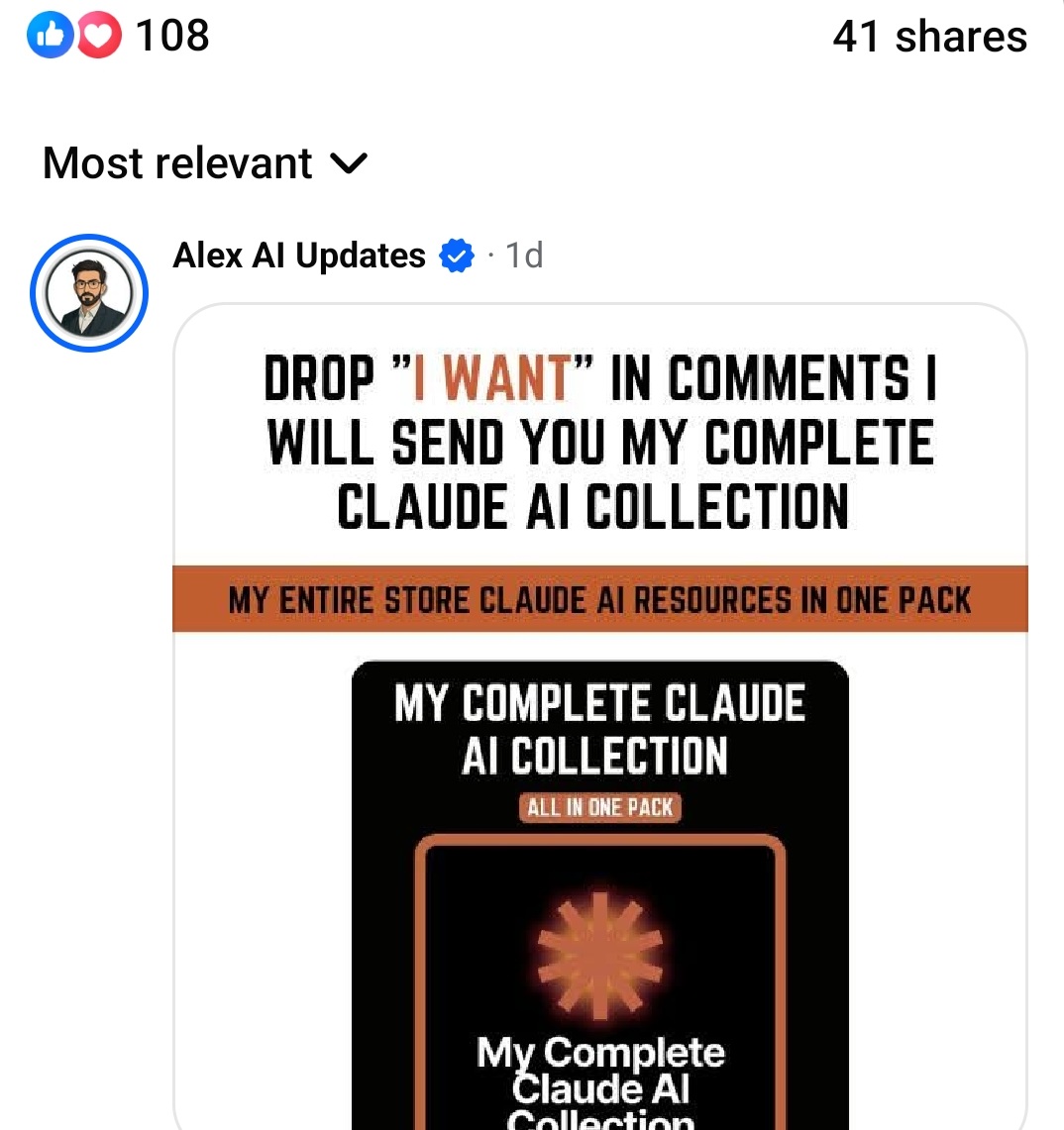
You've probably seen this kind of post on Facebook by now. "Drop 'I WANT' in the comments and I'll send you my complete Claude AI Collection." This one came from a page called Alex AI Updates. And unlike a lot of these posts, the seven prompts that show up in the comment thread are actually decent. So why is this still a review on HonestHustles? Because the prompts aren't the product. The page is. And once you see how the funnel is built, the whole thing reads differently.
🪝 The Pitch and What You Actually Get
Comment "I WANT" on the post and you'll get sent the "Complete Claude AI Collection." What that actually means is you eventually land on a Gumroad storefront branded as "Think Scale AI" with a $33+ bundle that has a strikethrough $95 price tag next to it. Same operator I reviewed in the Think Scale AI Gumroad write-up. Alex AI Updates is one of his lead-gen arms feeding the store. Two halves of one machine.
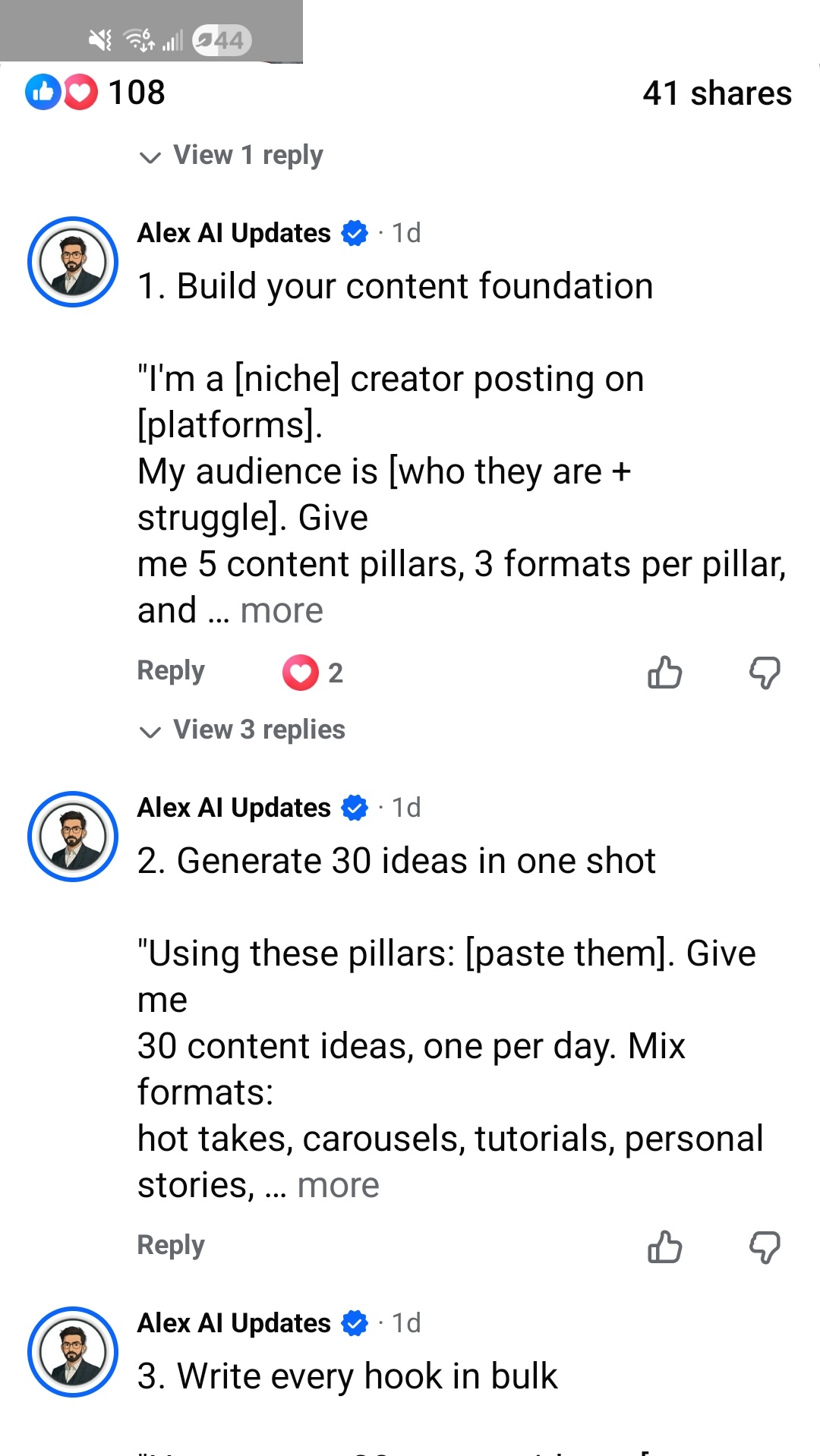
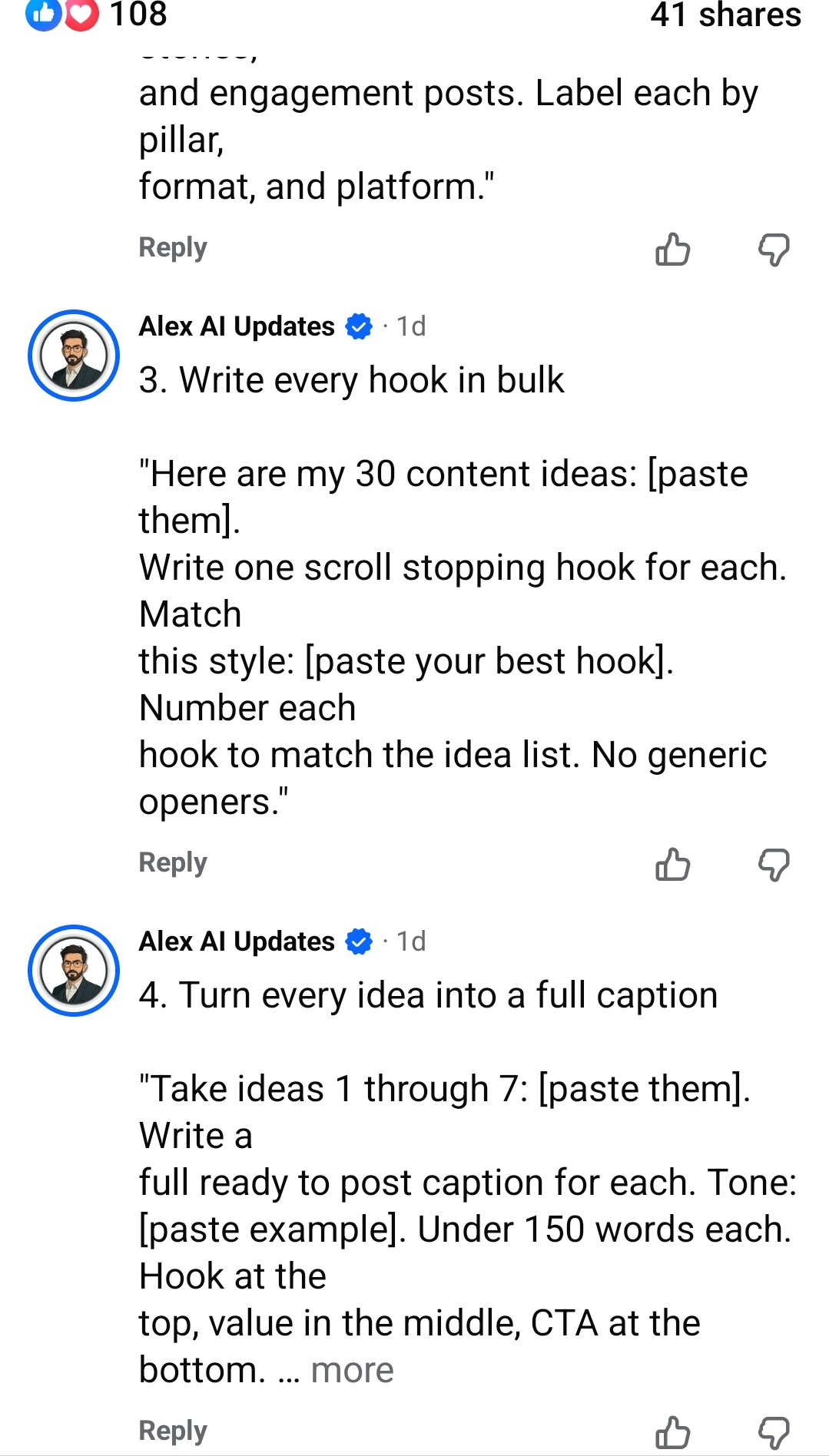
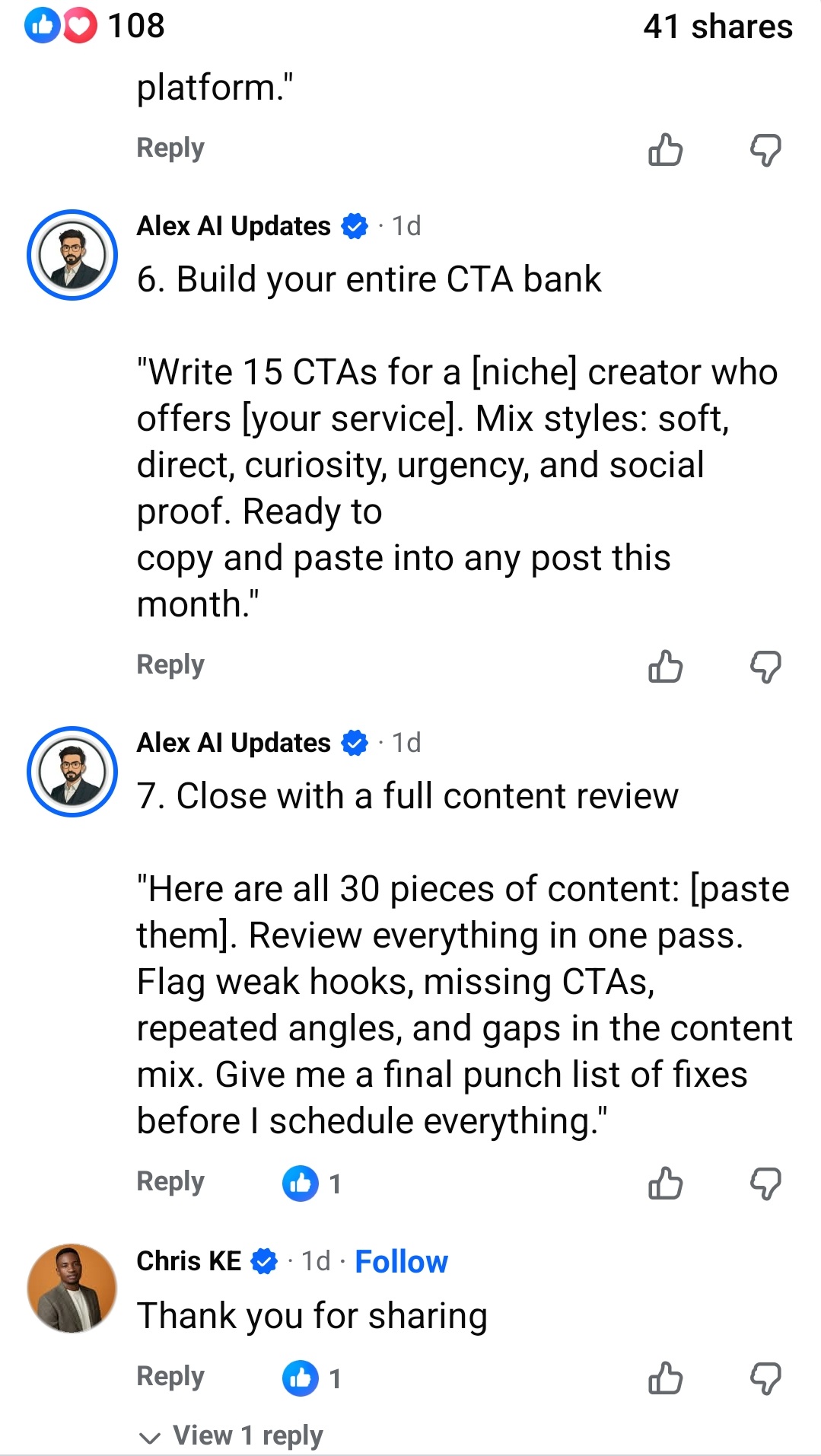
The seven free prompts in the Facebook comment thread are well-structured. Build content pillars, generate 30 ideas in one shot, write hooks in bulk, turn ideas into full captions, repurpose across platforms, build a CTA bank, and close with a content review. Credit where it's due — that's a real content workflow in the right order. A serious creator could actually use it. The prompts even include real prompt-engineering technique like pasting your own best hook as a style reference. If the seller stopped there, this would be a positive review.
🔍 The Honest Breakdown — The Bundle Sid
This is where the framing starts misleading. Inspecting the $33+ Gumroad bundle, several products inside it are listed at $0 individually on the same store. You could grab them for free without paying anything. The paid items in the bundle have no review history — the "AI Financial Freedom Prompt Library — Replace Your $3K/Year Advisor" at $12 shows zero reviews, and the "50 Advanced Claude AI Prompts for Web Developers" at $12 also shows zero. These are paid items that aren't selling.
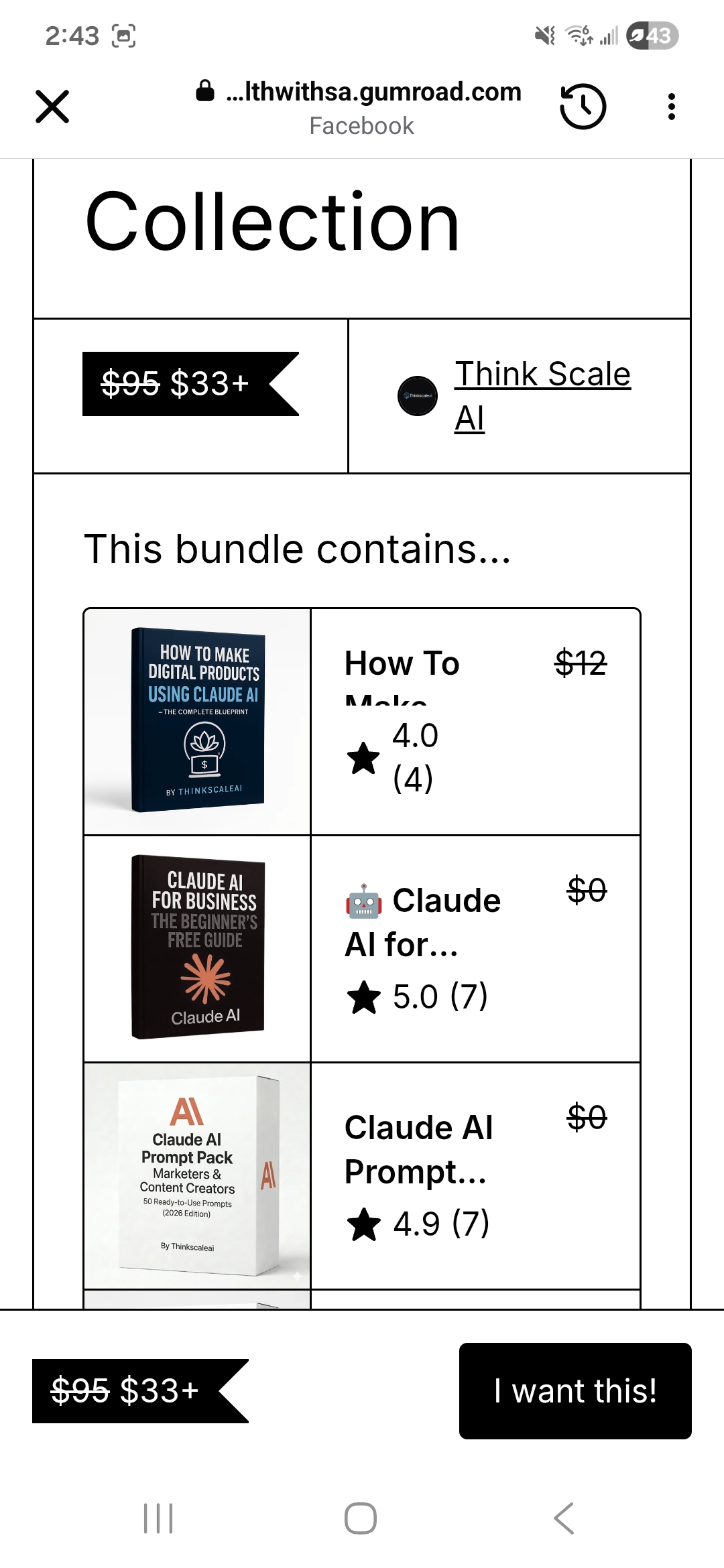
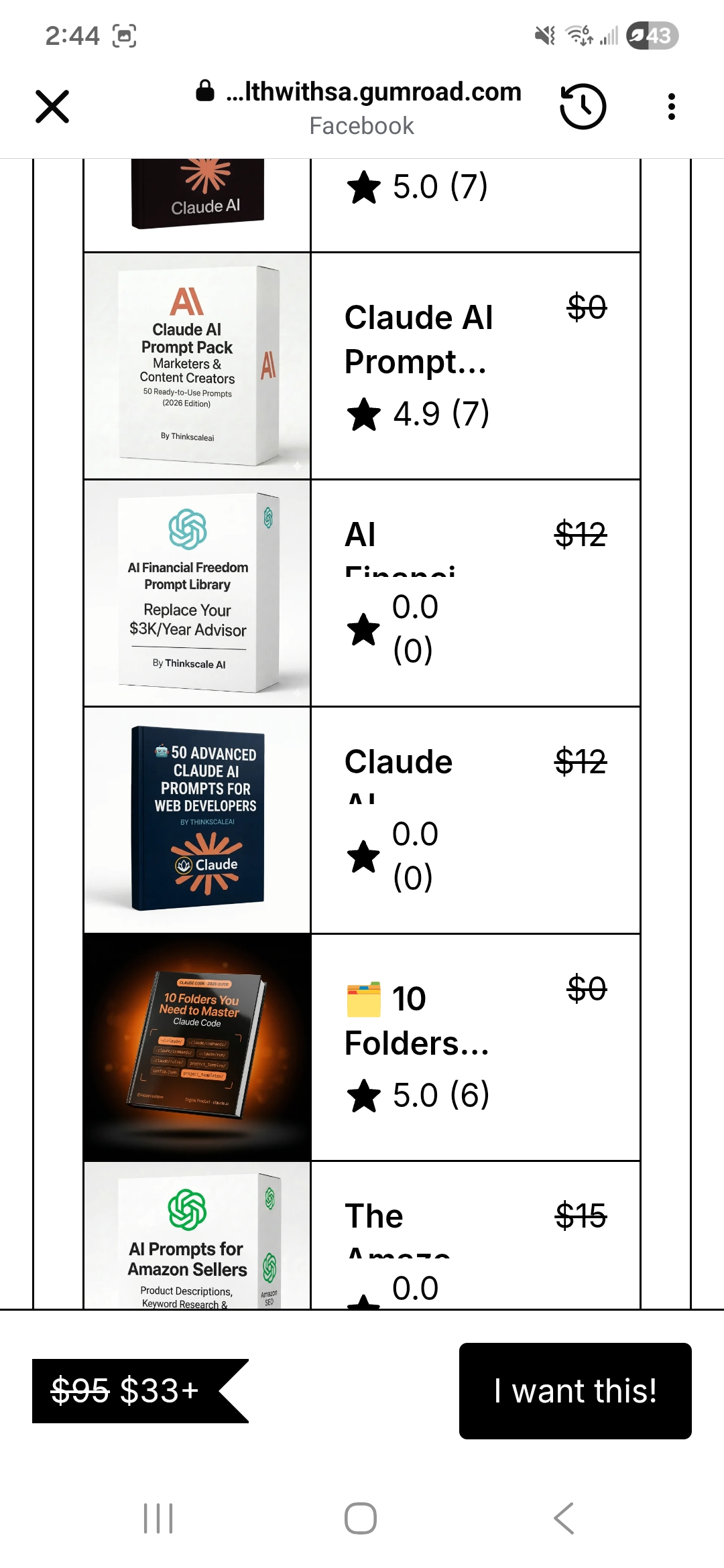
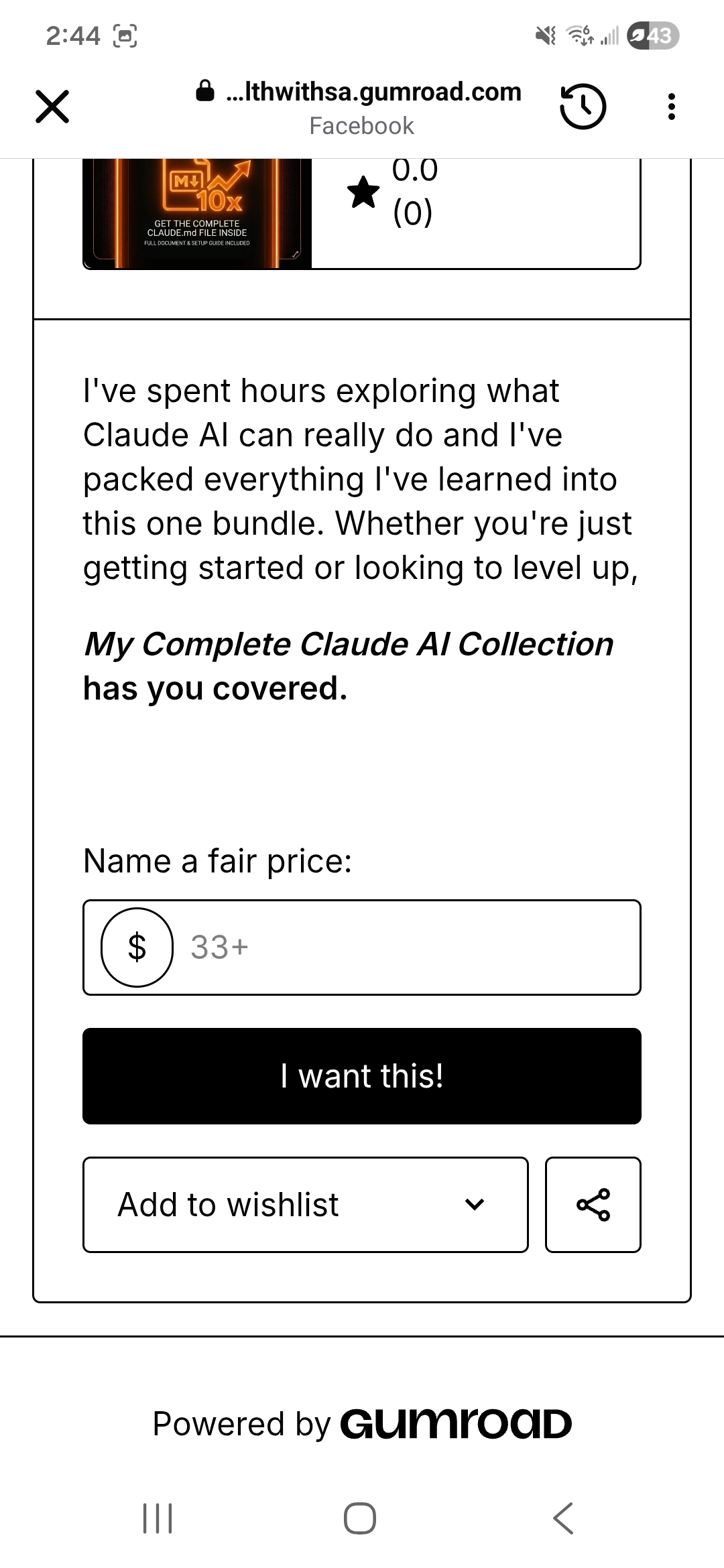
The $95 anchor is theatrical. Add up the actual paid items honestly and you get nowhere near $95. And the "Name a fair price: $33+" pricing is a common Gumroad psychological lever — it makes buyers feel generous while the seller's minimum is locked in. Selling free items as part of a "$95 bundle now $33" is the kind of value-inflation that wouldn't pass an honest sniff test in any other industry. If a grocery store advertised a $95 basket for $33 and half the items were free at the entrance, people would notice.
✅ Pros & ❌ Cons
PROS
✅ The seven free prompts in the comment thread are genuinely usable
✅ The content workflow is in a sensible order
✅ Includes real prompt-engineering technique (style references)
✅ Free entry — no payment needed for the actually useful part
CONS
❌ "Drop I WANT" is engagement bait, not generosity
❌ Bundle includes free items priced as paid value
❌ $95 strikethrough anchor is theatrical, not real savings
❌ Paid items in the bundle have zero buyer reviews
❌ Three brand identities across one operation
❌ Funnel routes everything toward higher-ticket upsells
⚙️ The Real Mechanic
Here's where it gets interesting. The ebook bundle isn't the actual product. The Facebook page is. Posts like "Drop I WANT" are engagement-bait designed to do one thing — harvest comments. Comments boost the post in Facebook's algorithm. Boosted posts grow the page. Pages with high engagement become assets that can be sold, monetized through Meta's creator programs, used to push affiliate links, or used to launch higher-ticket offers down the line.
The economics line up. The free ebooks cost the seller almost nothing to produce. The cheap paid ebooks ($9 to $15) confirm a customer's wallet for future upsells. The mid-priced bundle ($33+) is an impulse buy. The high-ticket items elsewhere on the store ($147 mega kit, $297 mentorship) are where the real margin is. The free Facebook post does the heavy lifting for the entire funnel. It's not a generous gesture. It's the front door of a sales operation, and the operation is more valuable than any single product in it.
This is the part most readers miss. They assume the seller's income comes from the ebooks. It doesn't. It comes from the attention infrastructure that the ebooks help build.
📝 A Note On Free Content As Strategy
Not every free offer is a hustle. Plenty of legitimate businesses give away real value to build trust and earn future sales — that's how every craft, trade, and skilled profession has worked since long before the internet. A 3D modeler giving away STL files, a builder sharing a tiny home guide, a chef putting recipes on their blog, a mechanic posting diagnostic videos — those are honest free content. The free thing is real, took real work, came from real skill, and the eventual paid offer is something only that person can deliver because of their actual expertise.
The dishonest version produces AI-generated freebies, bundles them with fake price anchors, and points everything at a generic high-ticket offer that anyone could clone. The shape of the funnel looks similar. The substance is opposite. The way to tell them apart isn't to assume everyone selling something is hustling you. It's to ask whether the free thing is a demonstration of skill, or a lever in a marketing machine.
🛠 What To Do Instead
Free prompts are genuinely free everywhere — Anthropic, OpenAI, and countless legitimate educators publish prompt guides written by people who actually use the tools daily. Learn the underlying patterns once, and you don't need bundles. Watch for the funnel, not the product. A standalone $20 ebook is just an ebook. A "$95 bundle now $33" with a Facebook page driving traffic to it and a $297 mentorship at the top of the catalog is a funnel. Ask yourself — would this exist if it didn't have a follow-up offer behind it? If yes, it's probably a real product. If no, the freebie is bait.
⚖️ Verdict
Not a scam, but a clear example of how dishonest hustle funnels are structured. The Facebook post itself is mild — even mildly useful — but it's the front door of a larger machine that uses theatrical pricing, free items dressed as paid value, and a multi-tier upsell ladder to convert attention into revenue. The biggest payday isn't in the ebooks at all. It's in the page traffic the funnel generates, the email list it builds, and the high-ticket offers that traffic eventually feeds.
The internet has plenty of honest creators giving away real value to earn real trust and eventually sell real things. It also has machines built to look like that, while delivering a fraction of the substance. The difference isn't whether someone's selling. It's whether what they're selling came from real work, or from running a prompt and packaging the output. Once you can spot the difference, the funnels stop working on you. And that's the whole point of paying attention to how they're built.
📌 Heads Up: Disclaimer
This review is not a personal attack on Alex AI Updates or the seller behind Think Scale AI. I don't know them personally. What's being reviewed here is the post, the funnel structure, and what gets delivered to the buyer. Real names, page handles, and screenshots are included because honest reviews need real examples. If anyone wants to push back, correct the record, or show verified results, the door is always open.
📢 Disclosure
Some links in this review may be referral or affiliate links. If you sign up or make a purchase through them, HonestHustles may earn a small commission at no extra cost to you. This helps support the site and allows us to keep reviews honest, independent, and ad-light.
